Motorcycle Rear Suspension
Concept Development for MotoStudent Competition
Rulebook analysis and initial research
Suspension linkage optimisation
Swingarm design and iteration
-
![]()
Research, Analysis, & Definitions
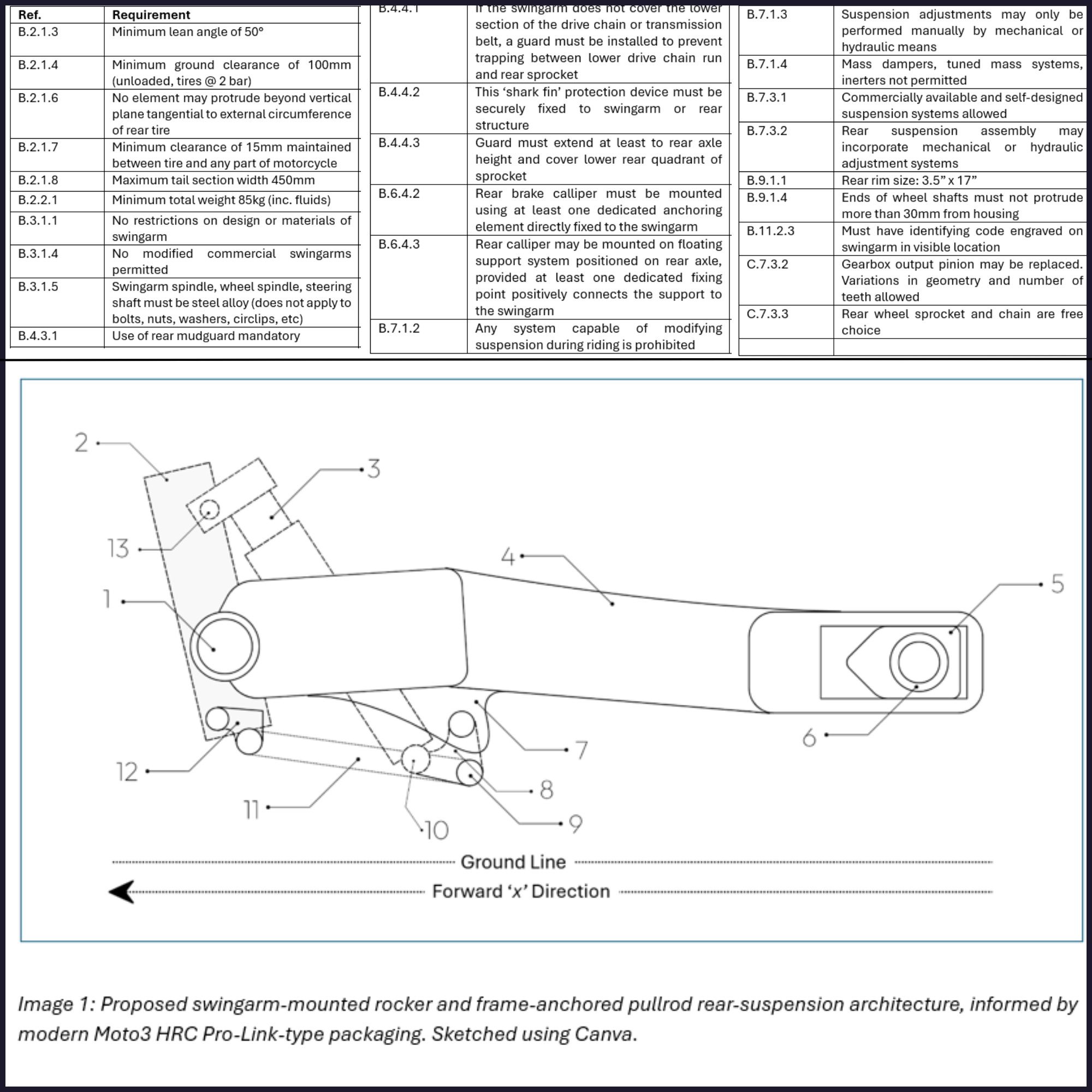
To begin this project, the MotoStudent rulebook was fully analysed to find regulations directly impacting the design of a swingarm and its surrounding suspension components. 25 articles were noted.
To provide further context to future design groups, initial sketches were drawn with definitions for the major components, and the coordinate system used.
As they are the most similar motorcycles to the regulations laid out by MotoStudent, Moto3’s KTM RC250R and Honda NSF250RW were studied and used as a guide when setting rough dimensions for initial design iteration.
Cost, manufacturability, and sustainability were also taken into account before beginning the design.
-
![]()
Python Linkage Analysis Model
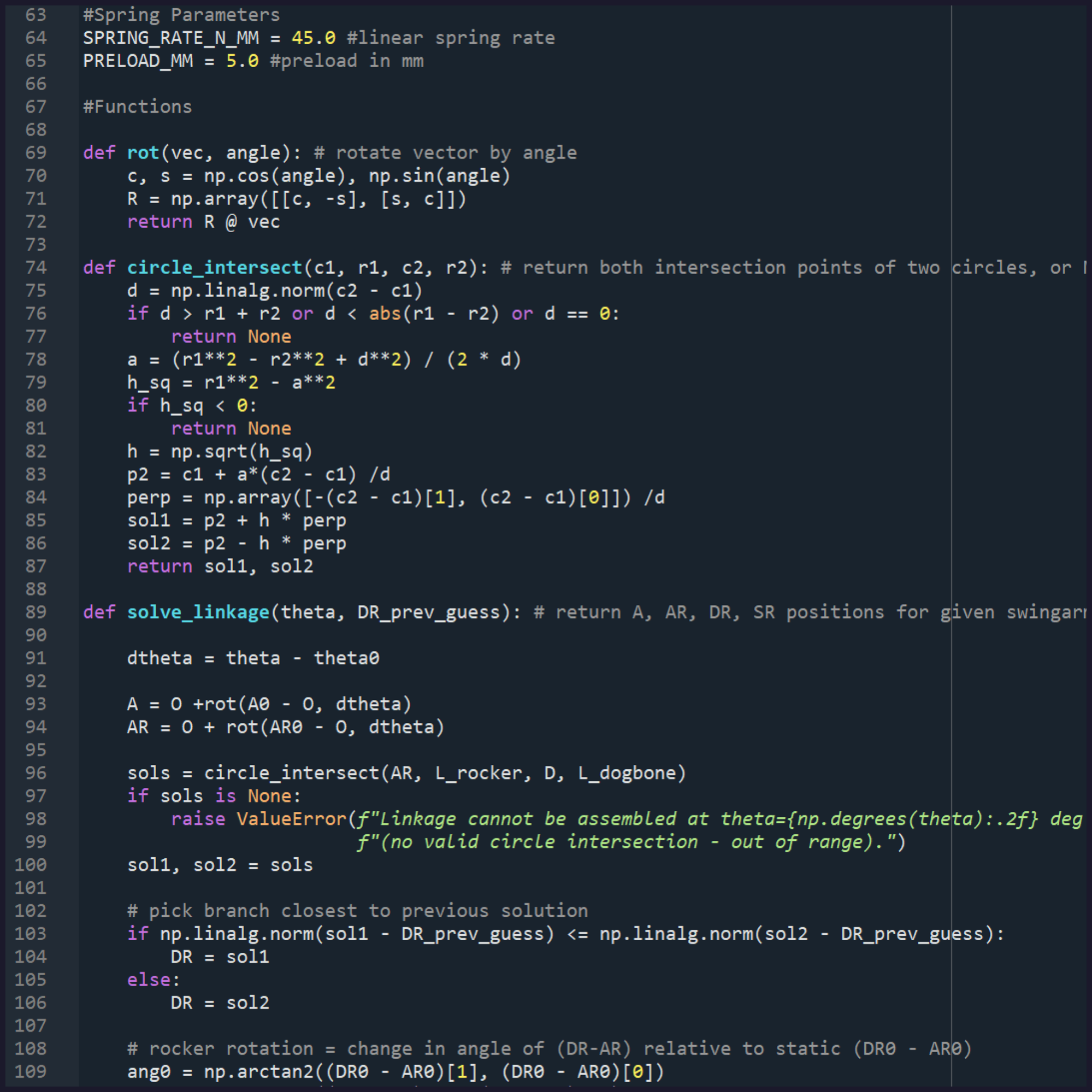
I wrote this script in Python for the purpose of finding an optimal suspension linkage model for my team’s concept motorcycle.
It takes pre-defined parameters such as spring rate, preload, and swingarm length, and uses a mathematical model to find an optimised setup.
Much of the suspension linkage can be modeled using intersecting circles, with radii equal to the length of components such as the dogbone, rear damper, and rocker sides.
-
![]()
HTML Adjustable Linkage App
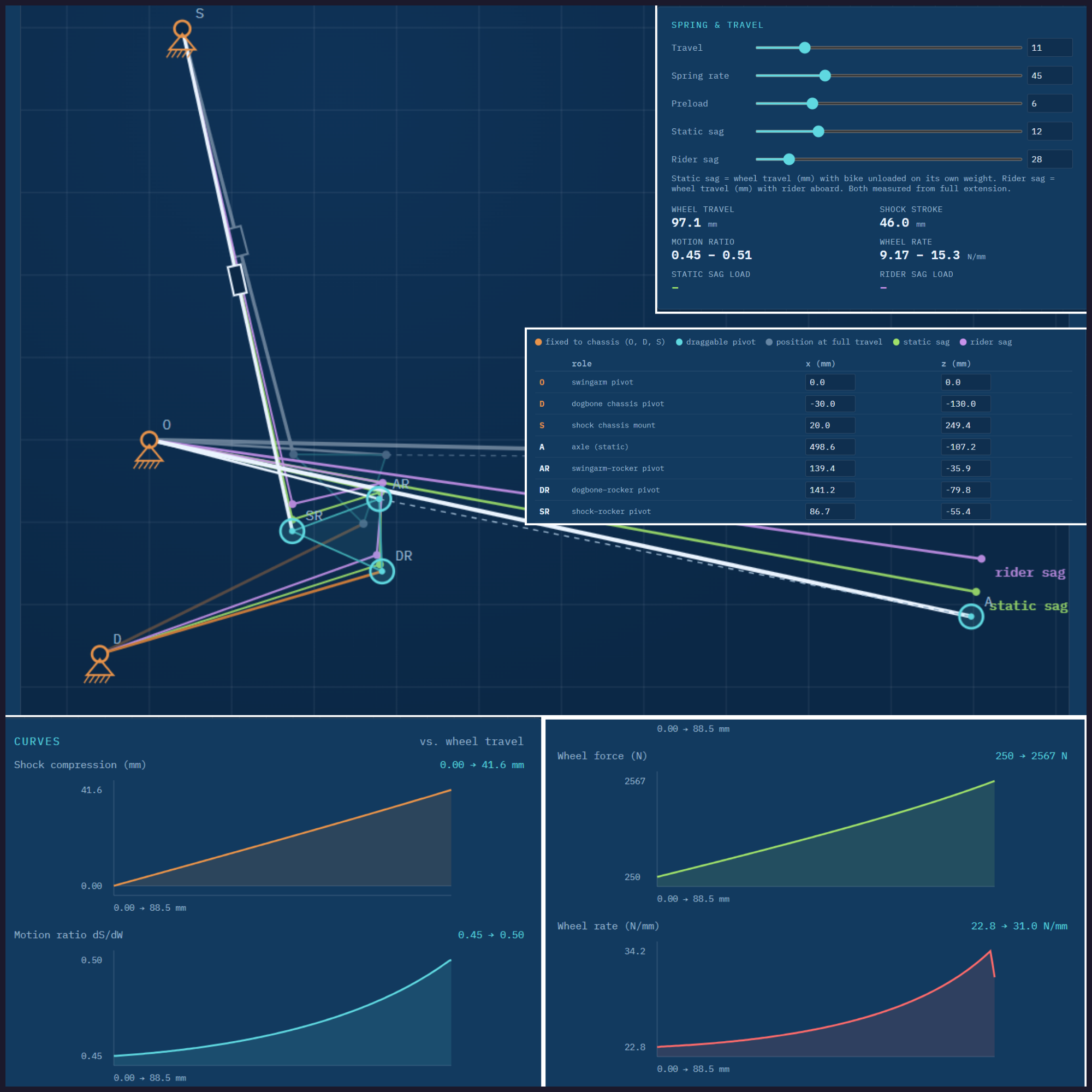
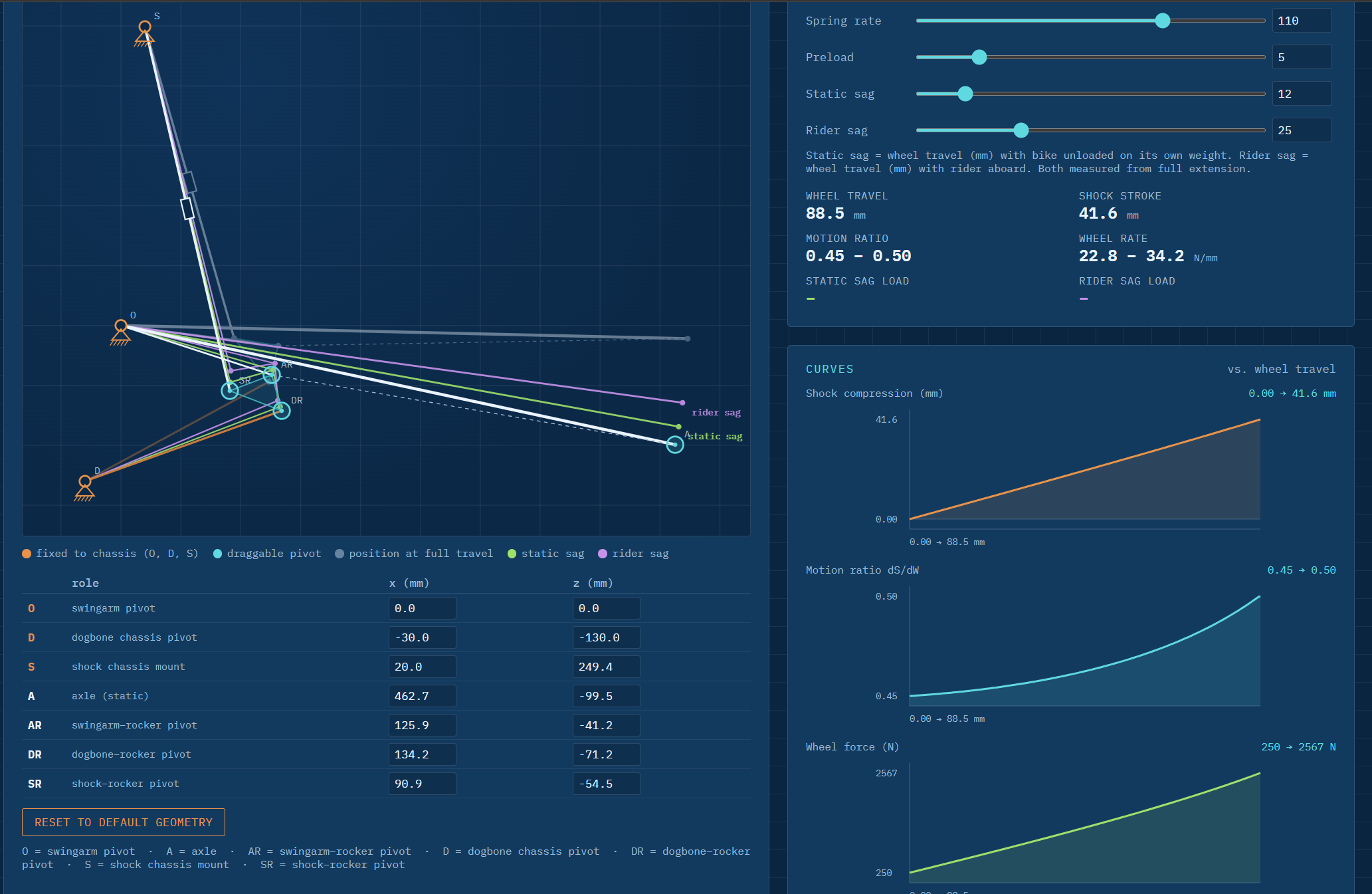
Created via Claude from the linkage model code I had written, this dynamic app allows for adjustment of all seven pivot points in the suspension linkage. Additionally, spring rate, preload, static sag, and rider sag can be modified, with graphs populating to show the effects of these modifications.
The goal here - using rough values for swingarm pivot-to-axle length and the measurements of a selected Ohlins damper - was to create a linkage setup which returned the desired wheel rate and force curves, while allowing meaningful adjustment through changes to the rocker and dogbone.
-
![]()
Initial CAD Models
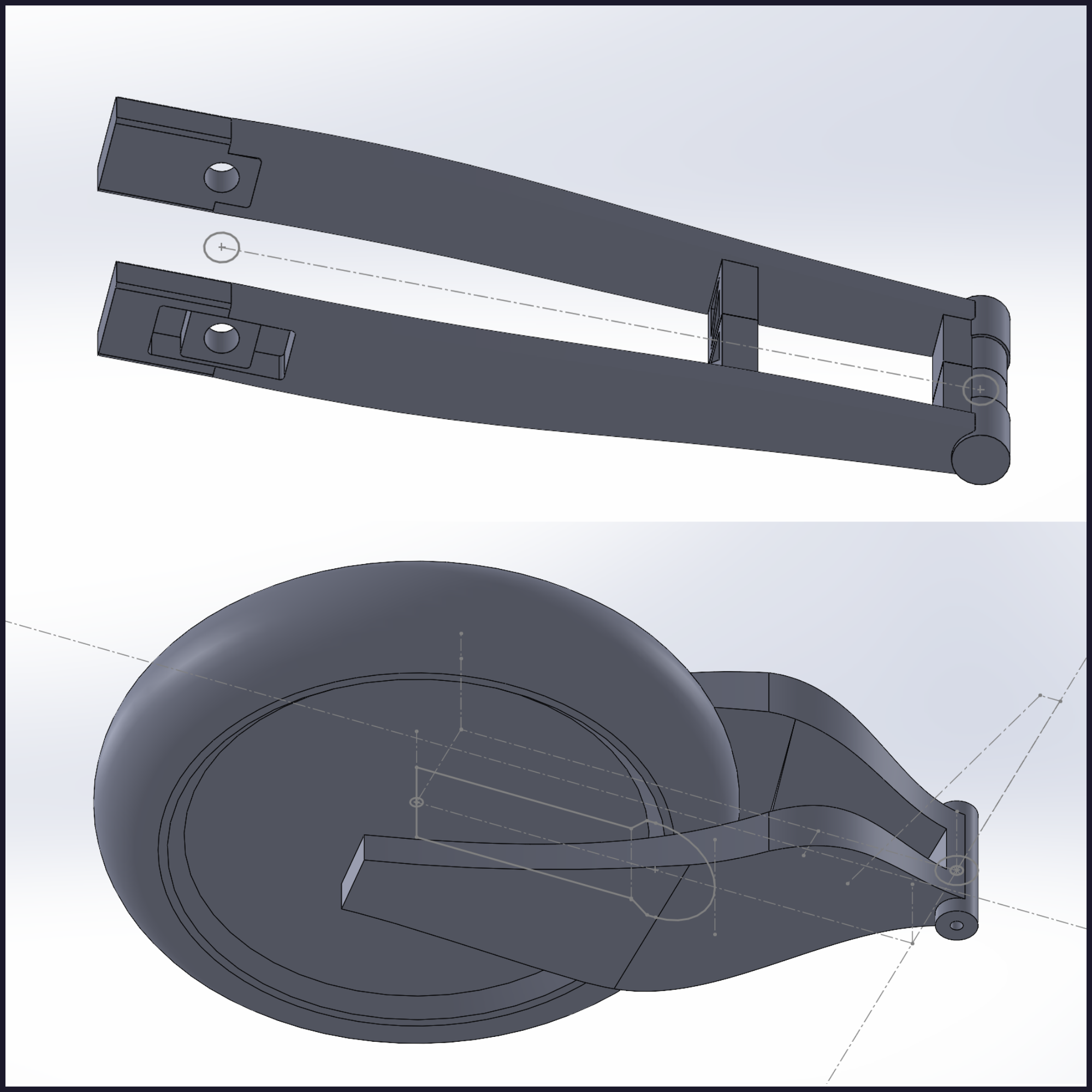
With a linkage setup selected for initial design, I explored some different design philosophies with the correct dimensions.
These were informed by both the loose sketches I had completed, and real-world examples. Between the different categories of motorcycle racing, there are many designs present with inspiration being found from Yamaha’s R6 Supersport, Ducati’s V2S and V4R, MotoGP concept machines, and the current designs visible in Moto3 and other MotoStudent teams.
An emphasis here during design was keeping the mass low, the stiffness high in the vertical direction and adjustable laterally, and ensuring that the swingarm won’t deform under the high torsional loads from the chain and wheel movement.
-
![]()
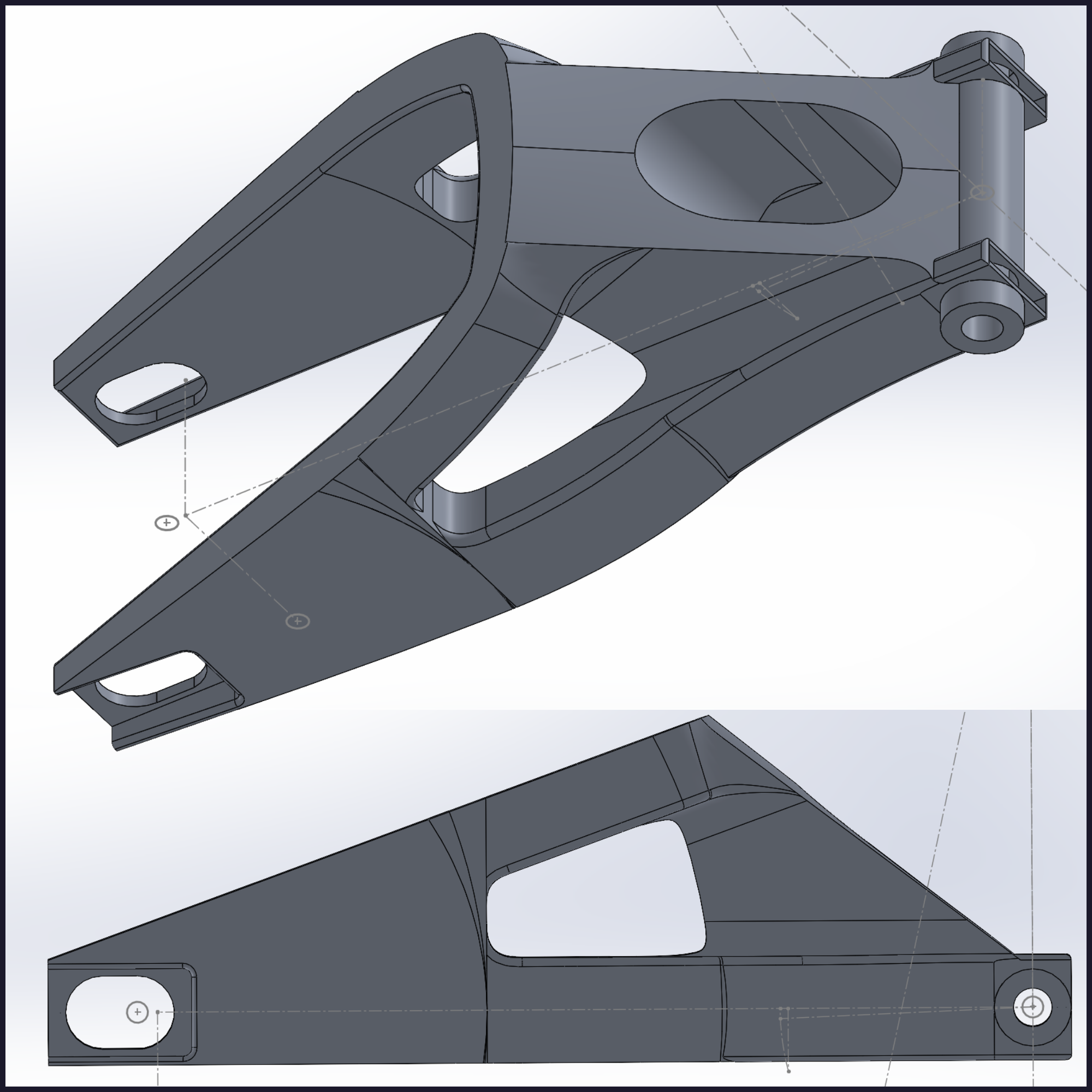
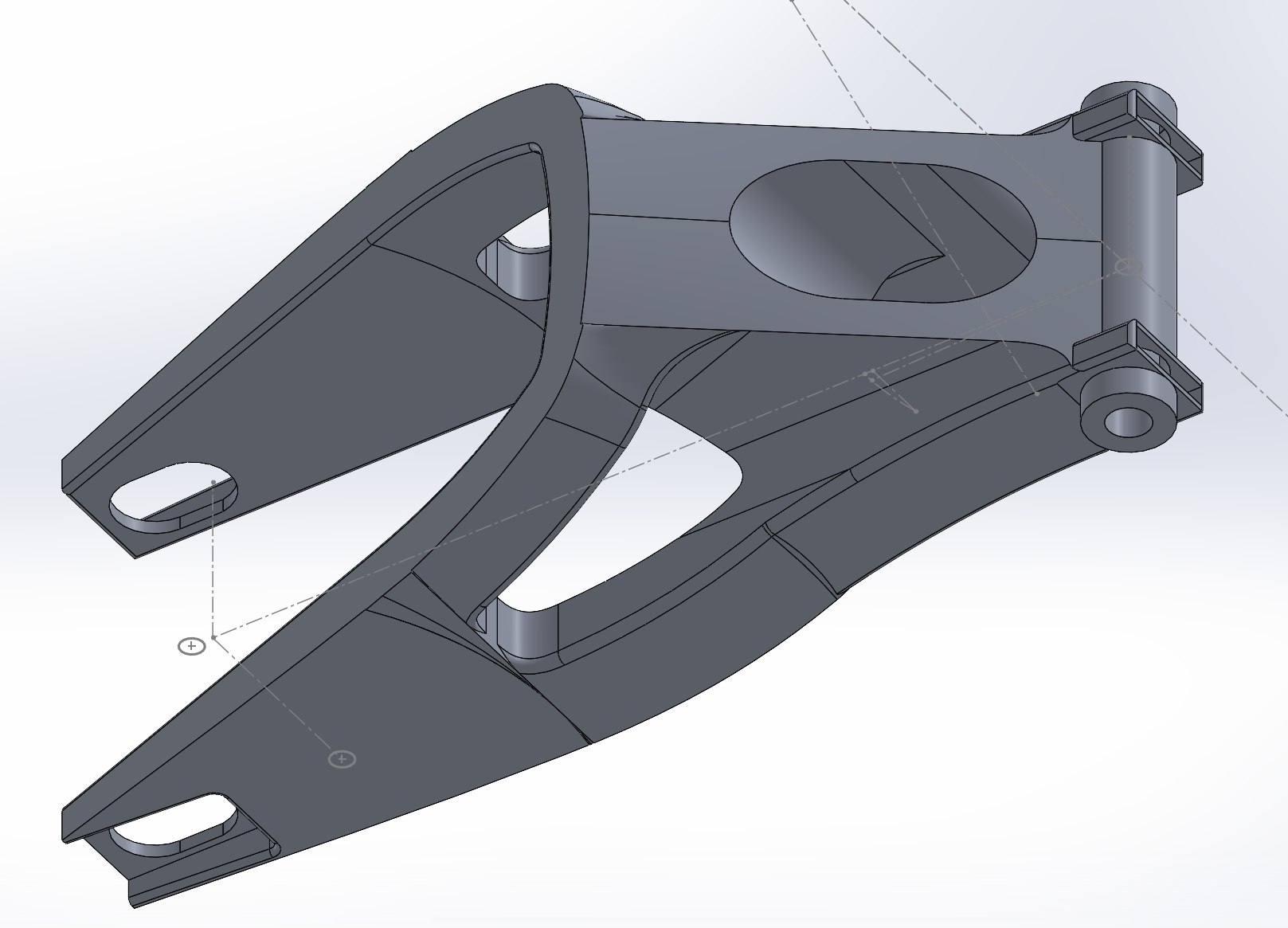
Developed CAD Model
With initial concepts finished, I conducted further pen-and-paper sketches before moving forward with a more detailed model.
Hollow aluminium ‘boxed’ construction
4 mm wall thickness
3.2 kg initial mass (before FEA)
510 mm pivot-to-axle length
Next Steps:
This CAD model will now be progressed into FEA to test for stiffness, potential mass savings, and deformation behavior.